
Will I Have Enough? How to Check If You Are On Track for Retirement
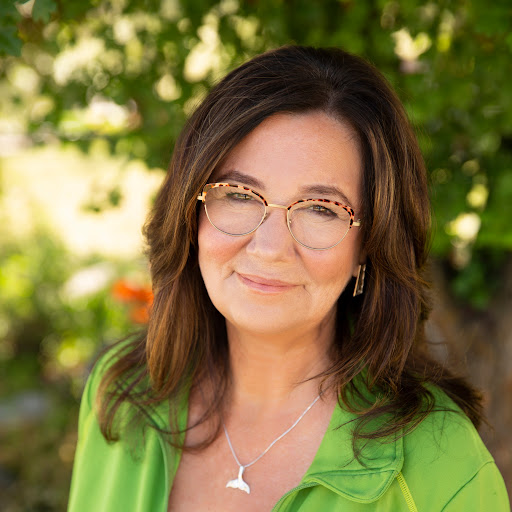

By Karen Fenske, Fenske Financial Coaching
There is one question that comes up in almost every conversation I have with people in their fifties and sixties, and it is usually asked quietly, near the end of the session: will I have enough? It is a reasonable question and a difficult one, and a surprising number of people carry it for years without ever sitting down to find the answer. This article will help you do exactly that. You will learn what "enough" actually means in practical terms, how to build a realistic picture of your retirement income from the pieces you already have, why the timing of CPP and OAS matters more than most people expect, and what your options are if the number comes back lower than you hoped. We will also look at what the research says about retirement planning and financial confidence, and how coaching can turn a frightening unknown into a manageable plan.
What Does "Enough" Actually Mean?
Most retirement advice starts with a percentage — you will need seventy per cent of your working income, or eighty, depending on who you ask. Those figures are a starting point, but they are not an answer, because they describe an average person and you are not one.
A more useful way to think about it: enough means your retirement income covers the life you actually intend to live, for as long as you live it, without you having to worry about it.
That definition has three moving parts, and each one is knowable.
The life you intend to live. Not a generic retirement — yours. Where you will live, whether the house is paid off, how much you will travel in the first ten years, whether you will help adult children or grandchildren, what you will do on an ordinary Tuesday.
The income you will have. CPP, OAS, any workplace pension, registered savings, non-registered savings, and any other source.
How long it needs to last. Longer than most people plan for. A healthy 65-year-old Canadian woman today has a reasonable chance of reaching her early nineties.
Most of the anxiety around retirement comes from having never made those three things explicit. The number feels terrifying while it is a vague shape. It becomes workable the moment you write it down.
How Do You Build a Realistic Picture of Your Retirement Income?
You can get surprisingly close on your own with about an hour and a few documents. Here is the order I would do it in.
Start with what the government will pay you. Log in to My Service Canada Account and find your CPP statement of contributions. It will give you an estimate. Then look up the current maximum OAS payment. Do not assume you will receive the maximum CPP — most people do not, because it requires nearly forty years of maximum contributions.
Add any workplace pension. Ask your plan administrator for a projection at your intended retirement age. If you have a defined benefit pension, this is likely the single largest number on your page.
Total your registered savings. RRSPs, LIRAs, and any defined contribution plan. These are pre-tax dollars, which matters — a $400,000 RRSP is not $400,000 of spending money.
Total your non-registered and TFSA savings. TFSA withdrawals are tax-free, which makes them considerably more valuable per dollar than RRSP withdrawals.
Write down your debts and their timelines. A mortgage that ends four years into retirement changes the picture significantly.
The Step Most People Skip
Now do the other side. Write down what you actually spend in a year, then adjust it for retirement.
Some things go down — commuting, work clothes, and if you are lucky, the mortgage. Some things go up, and this is where projections usually go wrong: travel in the early years, home maintenance as the house ages, and health costs that provincial coverage does not include. Dental work, prescriptions, physiotherapy, hearing aids, and eventually the possibility of care.
A retirement plan built on optimistic spending assumptions is not a plan. It is a hope.
Why Does the Timing of CPP and OAS Matter So Much?
This is the single most common place I see money left on the table, and it is entirely avoidable.
You can start CPP as early as 60 or as late as 70. Taking it early permanently reduces your monthly payment by 0.6% for every month before 65 — up to 36% less at age 60. Delaying past 65 permanently increases it by 0.7% per month, up to 42% more at age 70. OAS can also be deferred, increasing by 0.6% per month up to age 70.
Those are large, permanent differences, and the right answer genuinely depends on your situation. Taking CPP at 60 can be entirely correct if you have health concerns, no other income, or a pressing need to stop working. Delaying to 70 can be worth a great deal if you have other savings to draw on first and a family history of longevity, because a larger, inflation-indexed, guaranteed-for-life payment is a very good form of insurance.
What is almost never correct is defaulting into the decision because nobody explained the trade-off. This one calculation is worth an hour of professional time by itself.
The Other Timing Question: Which Account You Draw First
The order in which you draw down your accounts affects how much tax you pay over your whole retirement, and the difference can be substantial. Drawing from an RRSP in a low-income year, delaying OAS to avoid the clawback, using TFSA withdrawals to smooth taxable income — these are the levers that quietly protect tens of thousands of dollars, and they only work if you plan them before you need the money.
What Does the Research Say About Retirement Planning?
The relationship between planning and retirement outcomes has been studied extensively, and the findings are consistent enough to be worth acting on.
Financial Literacy and Retirement Planning
Research across a wide range of countries demonstrates a robust association between financial literacy and retirement planning, and between planning and wealth accumulation. Those who plan for retirement arrive at retirement with substantially more wealth than those who do not, and the effect persists after controlling for income, education, and other characteristics. The evidence suggests planning is not merely a marker of being organised but a mechanism through which retirement security is built.
The Economic Importance of Financial Literacy: Theory and Evidence, A Lusardi & OS Mitchell, 2014
The encouraging part of that finding is what it implies about people who feel behind. The gap between planners and non-planners is not principally a gap in income. It is a gap in having sat down and done the work — which is available to anyone, at any age, starting today.
What If the Number Is Lower Than You Hoped?
This is the part people are afraid of, so let us deal with it directly. If you run the numbers and the answer is "not yet," you have more options than you think, and every one of them is better than not knowing.
Work slightly longer, or slightly less. Retiring at 67 instead of 65 does three things at once: two more years of contributions, two fewer years of withdrawals, and a permanently larger CPP payment. Part-time work in the first years of retirement is remarkably effective for the same reason.
Delay CPP and OAS. If you can bridge a few years from savings, the permanent increase is significant.
Adjust the picture, not the whole plan. Often the shortfall is a specific line item — the second property, the annual overseas trip — rather than the entire retirement.
Look at the house. Downsizing is not the only option. Understanding what the equity could do, and what a reverse mortgage genuinely costs, at least puts the choice in your hands.
Fix the tax plan. Sometimes the money is already there and the drawdown order is quietly giving a share of it away.
Increase what you are saving now, specifically. Not "save more." A defined amount, automatically, starting this month.
The people I worry about are not the ones whose numbers come back short. They are the ones who never run the numbers, and arrive at retirement with no time left to adjust.
How Can Financial Coaching Help You Answer the Question?
Retirement planning has a technical half and a human half, and both matter.
The technical half is the projection: your income sources, your spending, your tax picture, CPP and OAS timing, and how long the money needs to last. That work benefits enormously from someone who does it regularly and is independent — because the answer should not depend on what anyone stands to sell you.
The human half is what most people are actually carrying. The fear of finding out. The guilt about not starting earlier. The disagreement with a partner about when to stop working. The reluctance to say out loud that you are not sure you can afford the retirement you have been picturing. That part does not respond to a spreadsheet.
What Personalised Strategies Does Fenske Financial Coaching Offer?
Retirement planning at Fenske Financial Coaching & Planning starts with what you want retirement to look like, then works backwards to the numbers. We look at CPP and OAS timing, RRSP and RRIF conversion, pension options, tax reduction, downsizing, and the spending and debt habits that will follow you into retirement.
Most people need two to four sessions to build an initial plan, then a review once or twice a year to keep it current. Sessions are $200 for individuals and $300 for couples, plus GST, and you pay as you go — there is no portfolio minimum and no requirement to buy anything.
If you would rather start smaller, a free twenty-minute conversation will tell you whether a full plan is what you need or whether one focused session on a single question would serve you better.
What Progress Actually Looks Like
The most common reaction I see when someone finally gets their retirement projection in writing is not delight, and it is not despair. It is relief.
The number is usually neither as good as they hoped nor as bad as they feared, and it is always more workable than the vague dread they had been carrying instead. Once it is on paper, it stops being a fear and becomes a set of decisions — and decisions can be made.
You are allowed to find out. Whatever the answer is, you have more room to act on it today than you will have next year.


Comments