
Start Planning for Retirement: Key Stages for Canadians
When Should You Start Planning for Retirement? A Stage-by-Stage Guide for Canadians
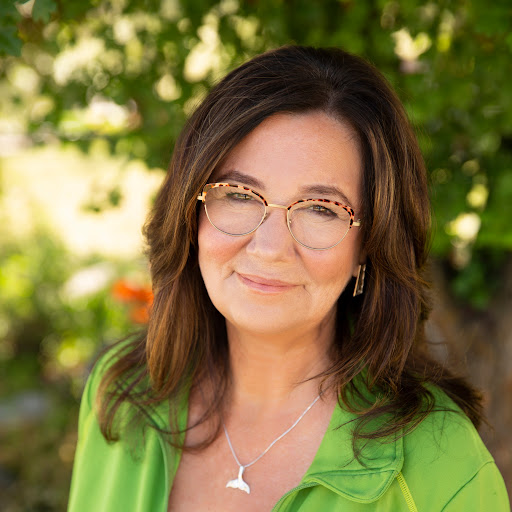
By Karen Fenske, Fenske Financial Coaching & Planning
Retirement planning is one of those topics that almost everyone agrees is important — and almost everyone wishes they had started sooner. The truth is, there is no single right age to begin. The best time to start is whatever age you are right now. What matters more than your starting age is the clarity of your plan, the consistency of your habits, and your willingness to adjust as your life changes. In this guide, you will learn what retirement planning actually involves at each stage of life, the milestones that matter most for Canadians, and how to take meaningful action whether you are 25, 45, or 65.
This article covers why early planning matters, what to focus on in your 20s through your 60s, the role of CPP, OAS, RRSPs, and TFSAs at each stage, and how personalized financial coaching can help you build confidence at any age. Whether you are just beginning your career or actively preparing your transition out of work, you will find practical, judgment-free guidance to help you take the next step.
Why Does Starting Early Make Such a Big Difference?
Starting early gives you the most powerful tool in retirement planning: time. When your savings have decades to grow, even modest monthly contributions can compound into a meaningful nest egg. A Canadian who begins saving $200 per month at age 25 will typically end up with significantly more by age 65 than someone who waits until 40 to begin saving twice that amount each month. This is not because the early saver is more disciplined or smarter — it is because they gave their money more time to work.
Equally important, starting early gives you flexibility. You have more room to recover from financial setbacks, more time to learn what works for your personality, and more freedom to adjust your goals as your life changes. Early planning also builds confidence. Once you understand how the pieces fit together, retirement stops feeling like a vague worry and becomes a manageable, even motivating, part of your life.
Households that engage in financial planning behaviours, including retirement preparation, tend to demonstrate higher financial well-being, greater savings, and more resilience to economic shocks than those who do not.
The Effect of Financial Literacy and Financial Planning on Retirement Confidence, A Lusardi, 2011
What Should You Focus On in Your 20s and 30s?
Your 20s and 30s are the foundation-building years. You may not have a lot of disposable income yet, but the financial habits you create now will shape everything that follows. The priority during this stage is not to accumulate huge balances — it is to build the systems and behaviours that will support decades of saving.
Build an emergency fund: Aim for three to six months of essential expenses set aside in a high-interest savings account. This protects your retirement savings from being raided during life's surprises.
Open a TFSA: The Tax-Free Savings Account is one of the most flexible tools available to Canadians. Contributions are made with after-tax dollars, but all growth and withdrawals are tax-free.
Start an RRSP if your income justifies it: If you are in a higher tax bracket, even small RRSP contributions provide an immediate tax refund and long-term tax-deferred growth.
Manage debt strategically: High-interest consumer debt should be addressed before aggressive retirement saving. Mortgage debt and low-interest student loans can often run alongside modest retirement contributions.
This is also the stage to develop self-awareness about your money personality. Are you a natural saver or a natural spender? Do you make financial decisions emotionally or analytically? Understanding your patterns now will help you choose strategies that actually work for you, rather than ones you abandon after a few months.
What Changes in Your 40s and 50s?
Your 40s and 50s are typically your peak earning years, but they often come with peak responsibilities as well — mortgages, growing children, aging parents, and possibly your own elder care planning. These are the years where retirement planning needs to become specific and intentional. The vague goal of "saving for retirement" needs to evolve into clear projections, concrete numbers, and considered trade-offs.
Many Canadians in this stage benefit from a formal retirement projection that estimates how much they will likely have at various retirement ages, what their retirement income could look like, and where the gaps might be. This is also when tax planning starts to matter more, because the difference between RRSP, TFSA, and non-registered savings can have significant long-term consequences.
Get a retirement projection done: Even a basic projection clarifies whether you are on track, ahead, or need to adjust. It transforms uncertainty into specific numbers you can act on.
Maximize matching and employer plans: If your employer offers a pension or RRSP matching program, contributing enough to capture the full match is one of the highest-return moves you can make.
Review insurance coverage: Life, disability, and critical illness insurance protect your retirement plan from derailment. This is a stage where coverage needs typically peak.
Begin thinking about retirement lifestyle: What does retirement actually look like to you? Travel? Volunteering? Part-time work? The clearer your vision, the easier it becomes to plan the finances behind it.
What Should You Be Doing in the Five Years Before Retirement?
The five years leading up to retirement are arguably the most important planning years of your entire life. Decisions made during this period are difficult to reverse and have outsized impact on the next two or three decades of your life. This is the window where your savings need to be stress-tested, your CPP and OAS timing decisions need to be made deliberately, and your transition from accumulation to decumulation needs to be mapped out.
Run detailed retirement projections: Update your numbers with current balances, expected pension income, projected CPP and OAS, and realistic spending estimates.
Decide on CPP and OAS start dates: You can start CPP as early as 60 or as late as 70 — each option has trade-offs that depend on your health, other income, and tax situation.
Plan your income conversion strategy: RRSPs must be converted to a RRIF or annuity by the end of the year you turn 71. Mapping out the order in which you draw down RRSPs, TFSAs, and non-registered accounts can save tens of thousands in lifetime tax.
Reassess risk in your investment portfolio: As you approach retirement, your tolerance for major market downturns typically decreases. A retirement-focused portfolio review is often warranted.
Consider housing decisions: Will you stay in your current home, downsize, or relocate? These decisions affect cash flow, taxes, and lifestyle for years to come.
Is It Ever Too Late to Start Retirement Planning?
Absolutely not. While the math is more challenging when you start later, meaningful improvements are still possible at every age. People who begin planning in their 50s or even 60s often see significant gains by tightening their spending, optimizing CPP and OAS timing, and making smart decisions about housing equity. Even in retirement itself, ongoing planning can improve outcomes — tax-efficient withdrawal strategies, careful budgeting, and adjusting investment allocations can stretch your savings further than you might expect.
The biggest mistake people make at this stage is assuming it is too late and giving up. The second biggest mistake is letting shame or embarrassment prevent them from getting help. Neither serves you. A clear, current snapshot of where you actually stand is always better than avoidance, no matter your age.
Retirement Planning Focus by Stage
Life Stage | Primary Focus | Key Action |
20s–30s | Habits & foundation | Open TFSA, build emergency fund, learn your money personality |
40s–50s | Strategy & projections | Get a retirement projection, maximize matches, plan tax mix |
55–65 | Transition planning | Decide CPP/OAS timing, map drawdown strategy, review risk |
65+ | Income management | Tax-efficient withdrawals, RRIF planning, lifestyle adjustments |
How Can Financial Coaching Support Retirement Planning at Any Age?
Retirement planning is rarely a one-time event. Life changes, markets shift, tax rules evolve, and your own goals will likely look different in 10 years than they do today. Working with a financial coach gives you a consistent partner to revisit your plan, adjust as needed, and stay accountable to the goals you set for yourself. A coach helps you connect the technical aspects of retirement planning — RRSPs, RRIFs, CPP, OAS, tax brackets — with the personal aspects of how you actually want to live.
Coaching is especially valuable when retirement planning feels overwhelming or when you are facing a transition like a career change, separation, or the loss of a spouse. Having an independent guide who knows your full financial picture and treats you with empathy rather than judgment can make the difference between a stalled plan and a thriving one.
Financial coaching includes helping individuals define financial goals, develop plans of action, and implement steps toward their goals. The coaching approach is designed to help people develop and sustain positive financial behaviours.
The application of coaching techniques to financial issues, JM Collins, 2012
How Fenske Financial Coaching & Planning Can Help
Retirement planning is rarely just about numbers — it involves your goals, your habits, your relationships, and your personality. Karen Fenske offers transparent, pay-as-you-go retirement planning for Canadians at every age and stage. There is no large investment requirement, no judgment, and no pressure. Sessions are designed to help you understand where you are, clarify where you want to go, and build a practical plan to get there.
Whether you are decades away from retirement, actively planning your transition, or already retired and looking to fine-tune your income strategy, working with an independent financial coach can give you the clarity and confidence you need. Karen offers a free 30-minute discovery conversation to confirm fit before scheduling a full session, so you can experience the supportive, judgment-free approach for yourself. You are the focus!
To learn more or to book your discovery call, visit fenskefinancialcoaching.com.

Comments